
Testing Service Center
Services
Quantification of Short Chain Fatty Acids (SCFAs)

- Quantitative analysis of short-chain fatty acids (SCFAs) is an advanced analytical method used to measure the concentrations of SCFAs in biological samples. SCFAs mainly include acetic acid, propionic acid, and butyric acid, which are metabolic products generated by gut microbiota through the fermentation of dietary fibers. These metabolites are closely associated with gut health, immune regulation, and metabolic disorders.
- Our laboratory employs ultra-performance liquid chromatography coupled with tandem mass spectrometry (UPLC-MS/MS) for the analysis of SCFAs ranging from two to five carbons. This technique provides high sensitivity and selectivity for separation and quantification. An internal standard is incorporated during the analysis to ensure accurate calibration, thereby enhancing data reliability and reproducibility.
Applications in clinical and research fields include :
- Evaluating the functionality and activity of gut microbiota.
- Investigating the relationship between dietary fiber and gut metabolism.
- Exploring the effects of SCFAs on gut barrier integrity, immune system regulation, and inflammatory responses.
- Supporting efficacy validation of probiotic products and functional foods.
- Serving as a basis for biomarker research in metabolic health, physiological conditions, or disease risk assessment.
Quantitative Analysis of L-Tryptophan
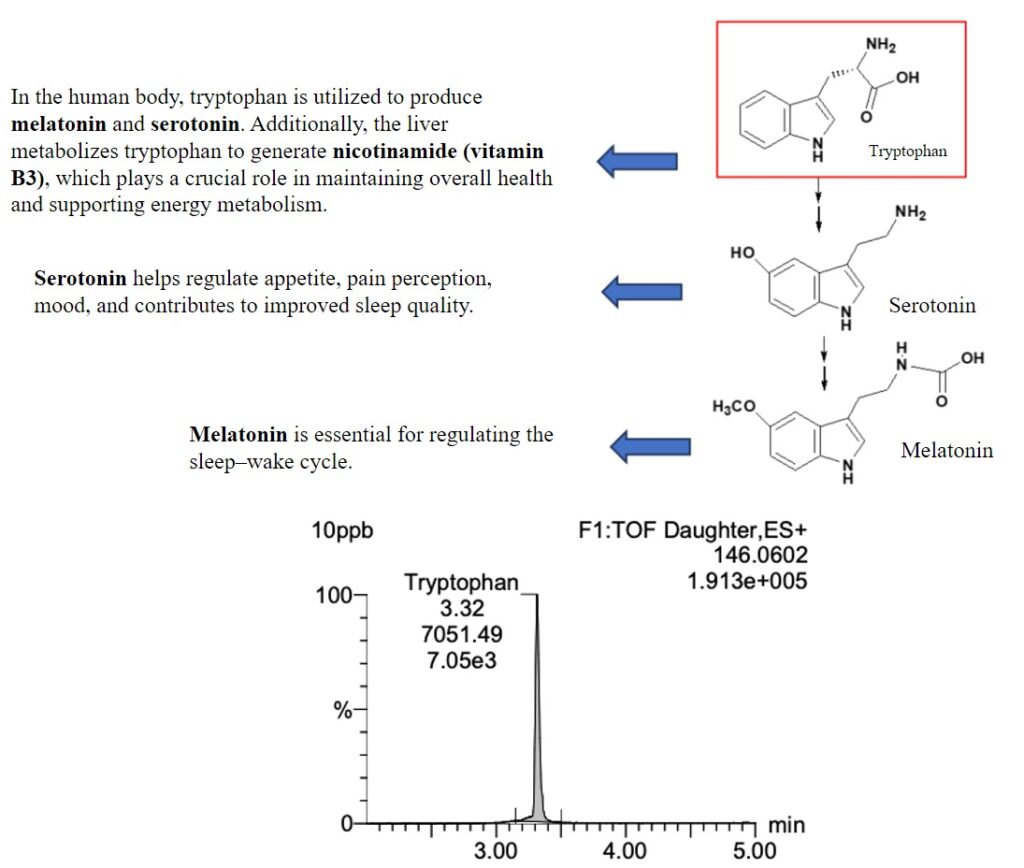
- Our laboratory utilizes ultra-performance liquid chromatography coupled with tandem mass spectrometry (UPLC-MS/MS) to perform amino acid detection and quantification. This method enables accurate analysis of a wide range of essential and non-essential amino acids, with tryptophan being one of the primary targets.
- Tryptophan is an essential amino acid for humans. Beyond its role in protein synthesis, it serves as a precursor for several key biomolecules, including serotonin, melatonin, and nicotinic acid (niacin). These metabolites are closely associated with neurotransmission, mood regulation, sleep mechanisms, and immune function. Therefore, quantitative analysis of tryptophan provides significant value in both health assessment and mechanistic research.
Applications in clinical and research fields include :
- Nutritional status assessment: Evaluating tryptophan intake and metabolism in humans to support nutritional supplementation and dietary recommendations.
- Neuropsychiatric research: Investigating the relationship between tryptophan and its metabolites with depression, anxiety, and sleep disorders.
- Immune and gut function testing: Assessing tryptophan metabolism via the kynurenine pathway to better understand gut microbiota interactions and immune regulation.
- Functional foods and nutraceutical development: Measuring tryptophan content in products to validate labeling and efficacy claims.
- Metabolomics and clinical research: Employing high-throughput detection of tryptophan metabolites as biomarkers for early disease warning and therapeutic monitoring.
Amino acids Quantification

- Our laboratory employs ultra-performance liquid chromatography coupled with tandem mass spectrometry (UPLC-MS/MS) to conduct detection and quantification of 20 amino acids, accurately covering both essential and non-essential amino acids. Amino acids are the fundamental building blocks of proteins. Beyond their role in basic physiological functions such as growth and tissue repair, they are also central molecules involved in numerous metabolic pathways, energy balance, and cellular signaling. Different amino acids play indispensable roles in neural regulation, immune responses, endocrine modulation, and cellular functions.
- Comprehensive quantitative amino acid analysis provides significant value in health assessment, disease research, and precision nutrition analysis.
Applications in clinical and research fields include:
- Nutritional status assessment: Comprehensive analysis of essential and non-essential amino acid intake and metabolism, supporting dietary recommendations and nutritional supplementation.
- Neuropsychiatric research: Investigating the relationships between amino acids and their metabolites with mood regulation, cognitive function, and sleep quality.
- Immune and gut function evaluation: Assessing the roles of amino acids in immune responses and gut microbiota interactions, with implications for inflammation and immune regulation.
- Functional foods and nutraceutical development: Measuring amino acid content in products to validate labeling accuracy and efficacy claims.
- Metabolomics and clinical research: Utilizing amino acids as key biomarkers through high-throughput profiling of amino acid compositions and metabolites for early disease detection, therapeutic monitoring, and personalized medicine applications.
By leveraging the high accuracy and sensitivity of UPLC-MS/MS, our laboratory provides reliable and comprehensive amino acid quantification, delivering precise data to support research and clinical institutions in health management, disease mechanism exploration, and product development.
TMAO Quantification
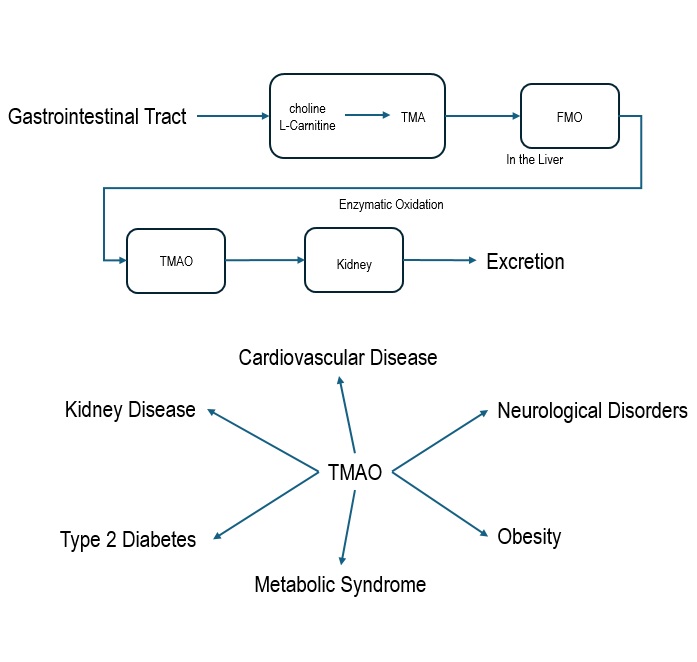
Detection and Application of Trimethylamine N-oxide
- Trimethylamine N-oxide (TMAO) is a metabolite generated from dietary nutrients containing trimethylamine (TMA) precursors—such as choline, betaine, and L-carnitine—through gut microbiota metabolism. These precursors are converted into TMA in the gastrointestinal tract by microbial activity, and subsequently transported to the liver, where they undergo enzymatic oxidation by flavin-containing monooxygenases (FMOs) to form TMAO.
- Recent studies have shown that elevated TMAO levels are closely associated with an increased risk of several chronic diseases, particularly playing a potential role in the development of cardiovascular disease, kidney disease, and metabolic syndrome.
- For detection, ultra-performance liquid chromatography coupled with tandem mass spectrometry (UPLC-MS/MS) provides high sensitivity and specificity, allowing effective separation and accurate quantification of TMAO concentrations in biological specimens such as plasma and urine. This method is well-suited for both clinical research and precision medicine. In addition, it enables simultaneous detection of TMAO and related metabolites (e.g., choline, betaine, and L-carnitine), facilitating the establishment of comprehensive metabolic profiles.
Applications in clinical and research fields include :
- Disease risk prediction and stratification: Combining TMAO levels with clinical indicators to establish early warning models for cardiovascular and metabolic diseases.
- Personalized diet and nutrition guidance: Adjusting dietary intake of TMA precursors (e.g., red meat, egg yolks) based on test results to reduce disease risk.
- Gut microbiota modulation studies: Supporting the development and efficacy evaluation of probiotics, prebiotics, and synbiotics.
- Drug development and mechanistic research: Assessing the impact of novel drugs on gut metabolism and TMAO biosynthesis pathways to optimize drug safety.
- Chronic disease monitoring and therapeutic evaluation: Tracking TMAO fluctuations during treatment as a biomarker for disease management and therapeutic response.
Bile acids Quantification

- Bile acids are amphipathic molecules synthesized from cholesterol in the liver through multi-step enzymatic reactions. Their primary functions include promoting the digestion and absorption of lipids and fat-soluble vitamins, as well as regulating lipid, carbohydrate, and energy metabolism through the enterohepatic circulation.
- Bile acids are classified into primary bile acids (e.g., cholic acid, chenodeoxycholic acid) and secondary bile acids (e.g., deoxycholic acid, lithocholic acid), which can be further conjugated with glycine or taurine to form conjugated bile acids. Variations in bile acid composition and concentration are closely associated with multiple diseases, including cholestasis, liver cirrhosis, gut microbiota imbalance, and metabolic disorders.
Applications in clinical and research fields include :
- Diagnosis and monitoring of hepatobiliary diseases: Plasma or serum bile acid profiling enables early detection of cholestasis, hepatitis, cirrhosis, and biliary obstruction, as well as therapeutic monitoring.
- Gut microbiota studies: Since secondary bile acids are generated by microbial transformation, bile acid profiles can serve as indirect indicators of gut microbiota health and functionality, supporting probiotic or microbiota-targeted therapeutic research.
- Metabolic disease research: Bile acids act as ligands for receptors such as FXR (farnesoid X receptor) and TGR5, influencing glucose and lipid metabolism. Related testing supports investigations into diabetes, obesity, and hyperlipidemia, as well as drug development.
- Drug safety evaluation: Applied in new drug development to assess potential drug-induced cholestasis or hepatotoxicity, supporting pharmacological and toxicological studies.
- Clinical nutrition and functional food validation: Monitoring diet-induced changes in bile acid composition to evaluate effects on liver–gut health.
DHEA/DHEAS Quantification


- Dehydroepiandrosterone (DHEA) and dehydroepiandrosterone sulfate (DHEAS) are important steroid precursor hormones secreted by the adrenal glands, ovaries, and testes. They play critical roles in the biosynthesis of sex hormones (testosterone and estrogens) and are associated with growth and development, immune regulation, bone health, and aging processes. DHEA and DHEAS are interconvertible, with DHEAS being more stable in circulation, making it a widely used indicator for long-term endocrine status assessment.
- We employ ultra-performance liquid chromatography coupled with tandem mass spectrometry (UPLC-MS/MS) for high-sensitivity and high-specificity quantification, enabling accurate measurement of DHEA and DHEAS levels in serum, plasma, or other biological samples, while avoiding cross-reactivity interference commonly seen in immunoassays.
Applications in clinical and research fields include :
- Diagnosis and monitoring of endocrine disorders, such as adrenal dysfunction and gonadal insufficiency.
- Age-related hormonal changes and anti-aging research.
- Sports medicine and athlete hormone monitoring.
- Evaluation of drug or nutritional supplement effects on hormone metabolism.
Glycolysis Quantification

- Glycolysis is a central pathway of cellular energy metabolism, responsible for breaking down glucose into pyruvate while generating ATP and NADH. This process occurs in the cytoplasm and can proceed under both aerobic and anaerobic conditions, making it one of the fundamental mechanisms by which most organisms obtain energy. Beyond energy production, glycolytic intermediates also serve as precursors for other metabolic pathways, including lipid biosynthesis, amino acid metabolism, and nucleotide production, highlighting its critical role in metabolic research and disease mechanism studies.
- Using ultra-performance liquid chromatography coupled with tandem mass spectrometry (UPLC-MS/MS), we provide high-efficiency separation and highly sensitive detection of multiple key metabolites in the glycolytic pathway, such as glucose-6-phosphate (G6P), fructose-1,6-bisphosphate (F1,6BP), 3-phosphoglycerate (3-PG), phosphoenolpyruvate (PEP), and pyruvate. Our method offers high specificity, low detection limits, and excellent quantitative accuracy, and is suitable for the analysis of samples from cells, tissues, blood, or biofluids.
Applications in clinical and research fields include :
- Biomarker discovery and development: Using glycolytic metabolite variations to establish models for early disease diagnosis and prognosis.
- Drug mechanism studies: Evaluating the effects of candidate drugs on energy metabolism, providing scientific evidence for drug development.
- Nutrition and exercise physiology: Monitoring energy metabolism efficiency before and after exercise or under different nutritional interventions, guiding training and dietary strategies.
- Metabolic engineering optimization: Regulating glycolytic flux in microbial or cellular systems to improve the yield of target products.
Tricarboxylic Acid (TCA) Cycle Metabolic
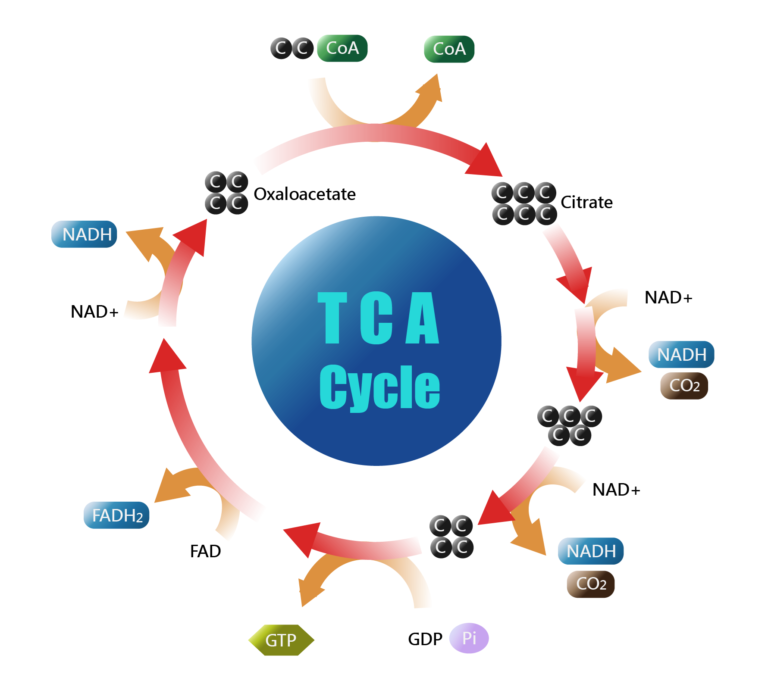
- The tricarboxylic acid (TCA) cycle, also known as the citric acid cycle or Krebs cycle, is one of the central pathways of cellular energy metabolism, primarily occurring in the mitochondria. This metabolic pathway oxidizes acetyl-CoA, derived from the breakdown of carbohydrates, fats, and proteins, to release energy and generate adenosine triphosphate (ATP), reduced cofactors (NADH, FADH₂), and carbon dioxide.
- The TCA cycle also serves as a critical hub that connects multiple metabolic pathways. Its key intermediates include citrate, isocitrate, α-ketoglutarate, succinate, fumarate, malate, and oxaloacetate.
- Using ultra-performance liquid chromatography coupled with tandem mass spectrometry (UPLC-MS/MS), each of these intermediates can be separated and quantified with high sensitivity and accuracy. This enables researchers to gain a deeper understanding of cellular energy metabolism and dysregulation mechanisms.
- Precise analysis of the TCA cycle provides valuable metabolic information across various fields, including medicine, healthcare, agriculture, and environmental sciences, supporting disease prevention, precision medicine, and biotechnological applications.
Applications in clinical and research fields include :
- Disease research and diagnostics: Profiling TCA cycle intermediates as potential biomarkers for tumor metabolic reprogramming, mitochondrial disorders, diabetes, and neurodegenerative diseases.
- Drug development and therapeutic evaluation: Monitoring the effects of anticancer agents, metabolic regulators, or mitochondria-targeted drugs on cellular energy metabolism in both preclinical and clinical studies.
- Sports and nutritional science: Assessing energy metabolism efficiency in athletes or specific populations, optimizing diet and supplementation strategies.
- Agricultural and environmental research: Analyzing plant physiology and crop energy metabolism to improve agricultural productivity and enhance ecological research.
Urea cycle Metabolic Pathway Analysis

- The urea cycle is a critical pathway for nitrogen waste metabolism in humans, primarily occurring in the liver. Its core function is to convert toxic ammonia, produced during protein catabolism, into urea, which is subsequently excreted by the kidneys to maintain nitrogen balance. The cycle involves several key intermediates and enzymatic reactions, including the interconversion of ornithine, citrulline, arginine, and aspartate.
- Dysfunction of the urea cycle may result from congenital genetic defects (e.g., deficiencies in OTC, ASS1, or ASL enzymes), or from acquired conditions such as liver failure, metabolic disorders, or nutritional imbalances. Impaired function leads to ammonia accumulation, causing hyperammonemia, which can adversely affect the central nervous system and manifest as lethargy, cognitive impairment, or even coma.
- Research on the urea cycle is of great importance not only for clinical treatment but also as a key component in the study of metabolic physiology and disease mechanisms, including evaluating the effects of pharmacological or nutritional interventions on nitrogen metabolism.
Applications in clinical and research fields include :
- Clinical diagnosis and disease monitoring for metabolic disorders.
- Assessment of ammonia metabolism in patients with acute or chronic liver disease.
- Research on neurological disorders and metabolic encephalopathies.
- Sports medicine and nutritional metabolism monitoring.
Customized Quantitative Analysis
- Facing the challenges of quantifying and characterizing highly complex trace analytes, our laboratory specializes in high-performance liquid chromatography coupled with quadrupole time-of-flight mass spectrometry (ACQUITY UPLC XeVO-G3-QToF). We provide diversified, highly sensitive, and accurate customized analytical services. Even in the case of extremely complex matrices such as natural products, metabolites, or clinical specimens, our platform enables rapid and precise qualitative and quantitative analysis.
- Our services cover a comprehensive workflow, including qualitative and quantitative analysis, internal standard calibration, linear range establishment, precision evaluation, and recovery assessment. These capabilities are widely applicable to academic research, product development, and quality control.
In addition, we offer expertise in trace sample detection as well as high-throughput analysis, meeting diverse and demanding requirements. If you have specific analytical needs or ideas for method development, please feel free to contact us. We will provide professional consultation and technical support to help you achieve high-quality research and development goals.
Untargeted Metabolomics Qualitative Analysis

Ref: Waters Corporation
- Our untargeted metabolomics service combines liquid chromatography–mass spectrometry (LC-MS) with the Progenesis QI professional analysis platform to comprehensively capture and compare thousands of compounds within your samples.
- Unlike targeted detection focusing on a single analyte, untargeted metabolomics performs a comprehensive scan, automatically comparing differences across samples, quantifying variations, and rapidly identifying metabolites using multiple databases such as HMDB, ChemSpider, and LipidBlast. You will receive clear statistical charts and detailed reports, allowing you to directly pinpoint which compounds are most relevant to your experimental conditions.
- Whether you are investigating disease mechanisms, searching for biomarkers, or analyzing food and environmental samples, we provide high-sensitivity and reproducible data support, enabling you to focus on biological interpretation and subsequent research.
Service Delivery Process
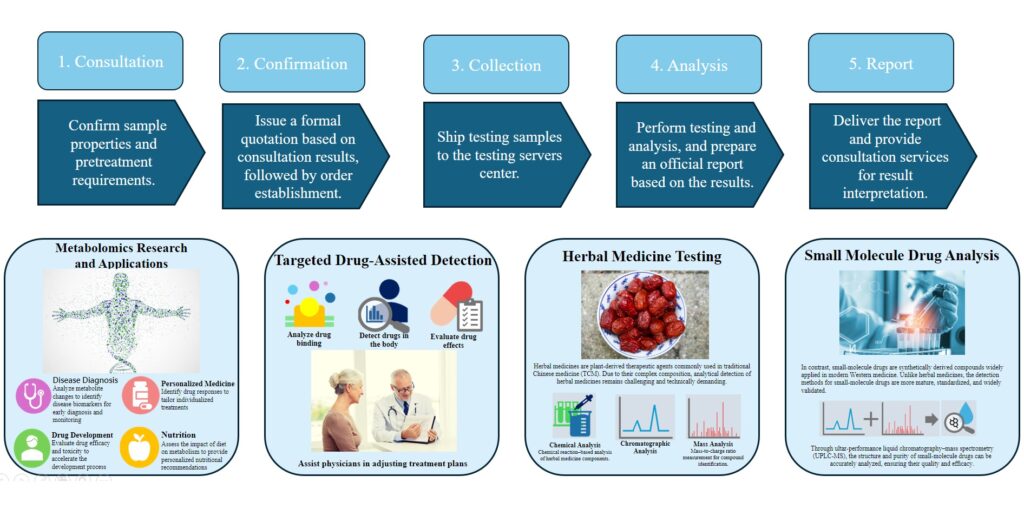
1. Contact
Please contact our center via phone or email to fill out a 「Service Application Form」 and provide us with your requirements. After a discussion and communication between both parties, we will confirm the service requirements.
2. Confirm
Based on the identified needs, we propose a service plan, including service content, analysis methods, and service fees, etc., and confirm that it has been approved by the customer.
3. Sample
The customer should provide the required analysis samples, along with a completed 「Service Request Form」 and send them to our laboratory via express courier.
4. Test
Perform various experiments and data analysis according to the contracted service content; report the implementation status to the client as appropriate during the implementation process.
5. Report
Provide customer related information and reports, including experimental methods and procedures, data analysis results.
1. Contact
2. Confirm
Based on the identified needs, we propose a service plan, including service content, analysis methods, and service fees, etc., and confirm that it has been approved by the customer.
3. Sample
4. Test
Perform various experiments and data analysis according to the contracted service content; report the implementation status to the client as appropriate during the implementation process
5. Report
Provide customer related information and reports, including experimental methods and procedures, data analysis results.